What Are Macros and Why Should You Track Them? (Simple Guide)
What are macronutrients?
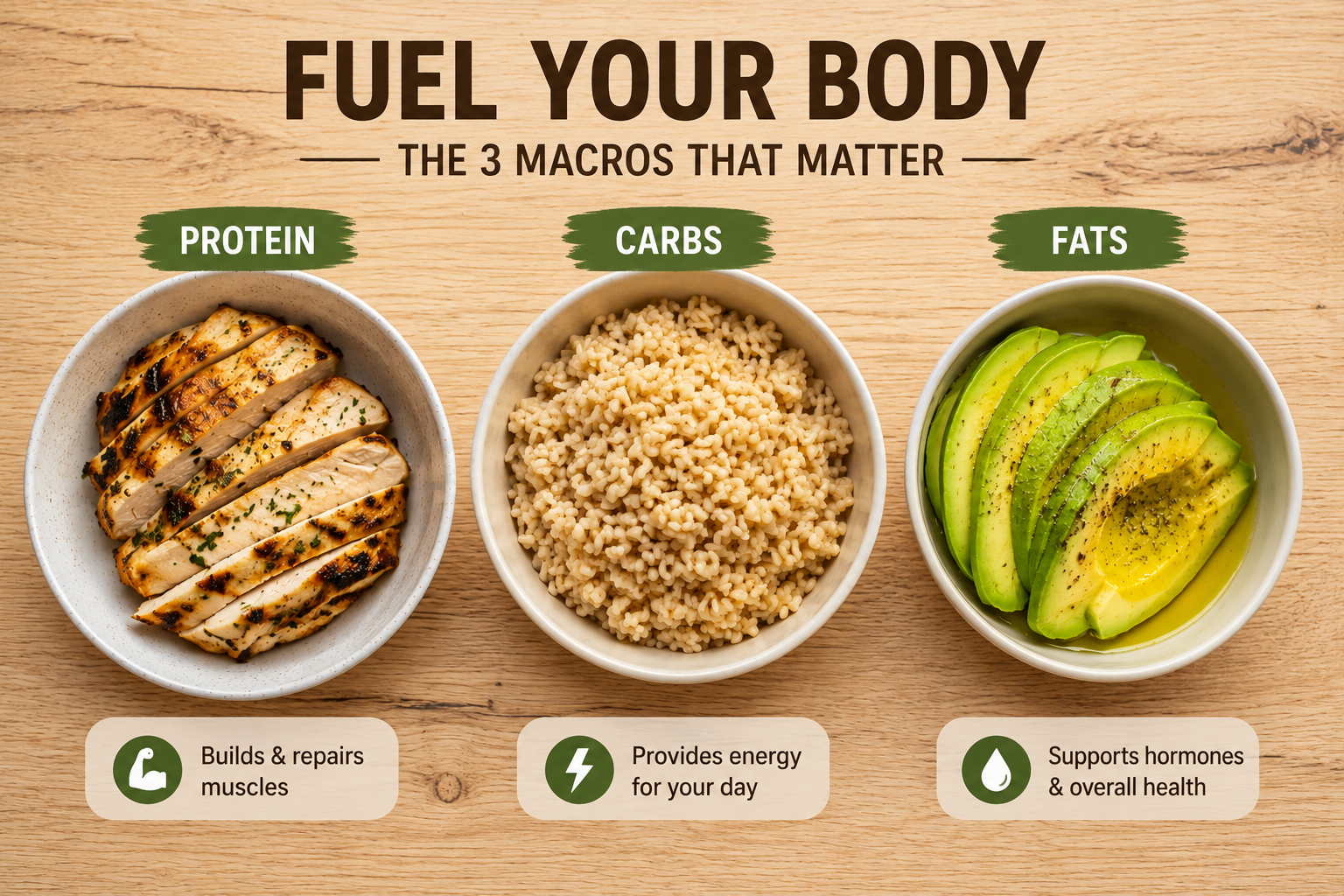
Macronutrients (macros) are the three nutrients your body gets energy from — protein, carbohydrates, and fat. Every calorie you eat comes from one of these three. This is what macros are and why should you track them: tracking macros tells you not just how much you're eating, but what kind of fuel you're giving your body.
The 3 Macros Explained: Protein, Carbs, Fat Calories Per Gram
- Protein — 4 calories per gram. Builds muscle, keeps you full, and protects against muscle loss during a calorie deficit
- Carbohydrates — 4 calories per gram. Your body's preferred energy source, especially for workouts and brain function
- Fat — 9 calories per gram. Essential for hormones, vitamin absorption, and long-lasting energy
A good starting macro split
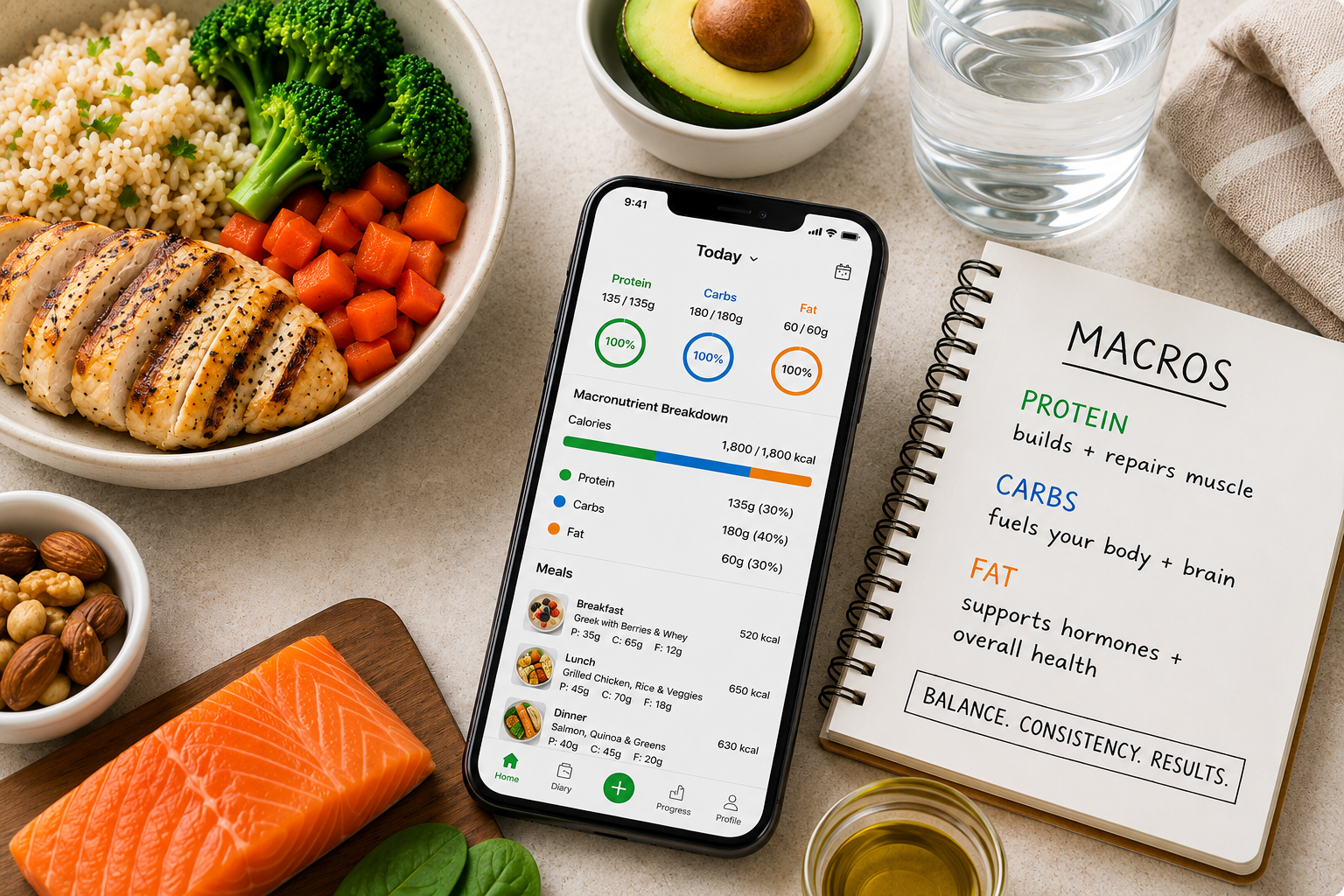
For most beginners aiming to lose fat while keeping muscle, a balanced starting point is 30% protein, 40% carbs, and 30% fat. At 1,800 calories per day, that means roughly 135g protein, 180g carbs, and 60g fat. Adjust over time based on how your body responds.
Adjust over time based on how your body responds. This is generally considered one of the best macro splits for weight loss because it keeps protein high enough to preserve muscle while still supporting workouts.
Why protein is the most important macro
- It keeps you full longer than carbs or fat at the same calorie amount
- It preserves lean muscle while you are in a calorie deficit
- Your body burns more calories digesting protein than it does digesting carbs or fat
- Aim for 1.6–2.2g of protein per kg of body weight daily
- How much protein should I eat to lose weight? Aim for 1.6–2.2g of protein intake per kg bodyweight daily — that range covers most people trying to preserve muscle in a deficit.
Track your macros effortlessly with Caloura
Caloura is a macro tracking app that shows you the exact gram breakdown of protein, carbs, and fat for every meal you log — through intuitive visual charts. No spreadsheets, no manual calculations. Now that you know what macros are and why you should track them, download Caloura free and start hitting your macro targets today.
How to Calculate Macros for Fat Loss
Once you know your daily calorie target, multiply it by your split percentage, then divide by calories-per-gram (protein and carbs = 4, fat = 9). At 1,800 calories on a 30/40/30 split, that's 540 protein calories ÷ 4 = 135g protein, and so on. Caloura calculates this automatically once you set your goal, no math required.
Enjoyed this article?
Start your nutrition journey with Caloura.