Calorie Tracking on GLP-1 Medications (Ozempic, Wegovy, Zepbound): What's Actually Different
If you're on Ozempic, Wegovy, Zepbound, or Mounjaro, you've probably noticed something calorie calculators don’t account for: you’re just not hungry the way you used to be. Your appetite is suppressed, portions that used to feel normal now feel like too much, and generic “eat 1,500 calories a day” advice doesn’t really fit your situation anymore. That’s why calorie tracking on Ozempic looks so different from standard calorie counting. GLP‑1 medications change the entire equation — here’s what’s actually different, and how to track in a way that works with the medication instead of against it.
Why Calorie Tracking Works Differently on GLP‑1s
GLP‑1 receptor agonists slow gastric emptying and act on appetite centers in the brain, which is why people on these medications naturally eat less without consciously restricting. That sounds like an easy win for a calorie deficit — and it usually is — but GLP‑1 calorie tracking introduces three problems standard calorie apps weren’t built for:
1. Under‑eating becomes the real risk, not overeating.
Most calorie apps are designed around the assumption that people struggle to stay under their target. On a GLP‑1, the opposite problem shows up: appetite suppression can push intake too low, which risks muscle loss, nutrient deficiencies, and fatigue.
2. Protein intake becomes critical.
Because total food volume drops, protein is often the first thing to fall short — and low protein intake on Ozempic during rapid weight loss significantly increases the risk of losing muscle mass along with fat. Hitting a protein target matters more than hitting a calorie target.
3. Smaller portions make manual logging harder to trust.
When you’re eating a few bites of several things throughout the day instead of three defined meals, manually searching a food database for each item becomes tedious fast — which is often why people on GLP‑1s stop tracking altogether, right when tracking would help them the most.
What to Actually Track on a GLP‑1
Rather than obsessing over hitting a strict calorie ceiling, these Ozempic nutrition tips shift the focus to:
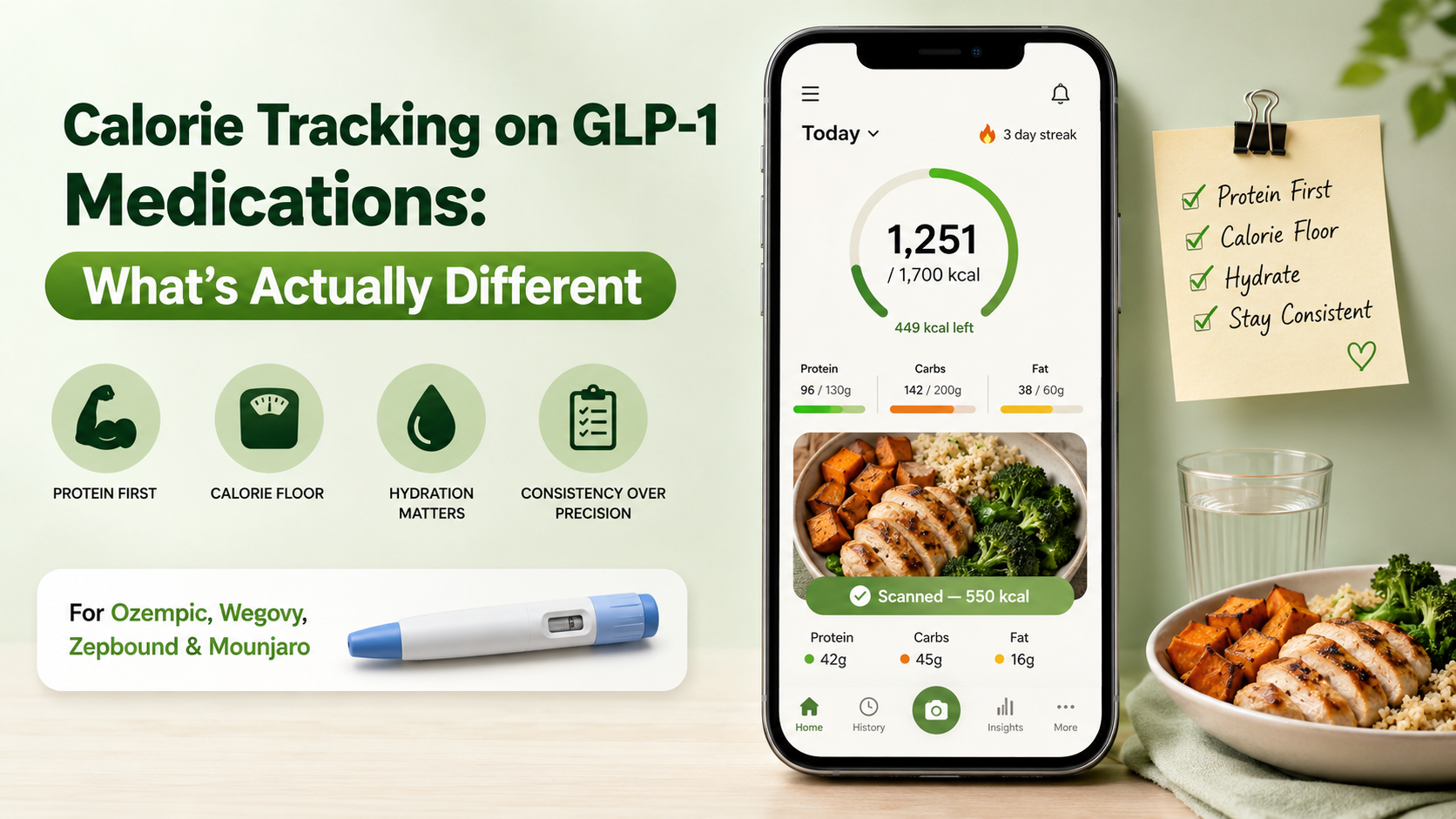
- Protein first: aim for roughly 0.6–0.8 g of protein per pound of body weight to protect lean muscle during rapid weight loss
- A calorie floor, not just a ceiling: know your minimum safe intake so appetite suppression doesn’t push you too low — this is the core idea behind managing a healthy calorie deficit on GLP‑1
- Micronutrients: reduced food volume means less variety, which raises the risk of missing key vitamins and minerals — fiber and hydration in particular tend to drop first
- Consistency over precision: a rough log every day beats a perfect log for three days and nothing after
Common Nutrition Gaps on GLP‑1 Medications
- Fiber: smaller portions often skip fiber‑rich foods, which can worsen the constipation many people already experience on these medications.
- Hydration: reduced appetite often comes with reduced thirst cues too.
- Muscle‑protective protein: the single most important number to track, and the one most people miss when focused only on calories.
Why AI Photo Tracking Fits GLP‑1 Users Especially Well
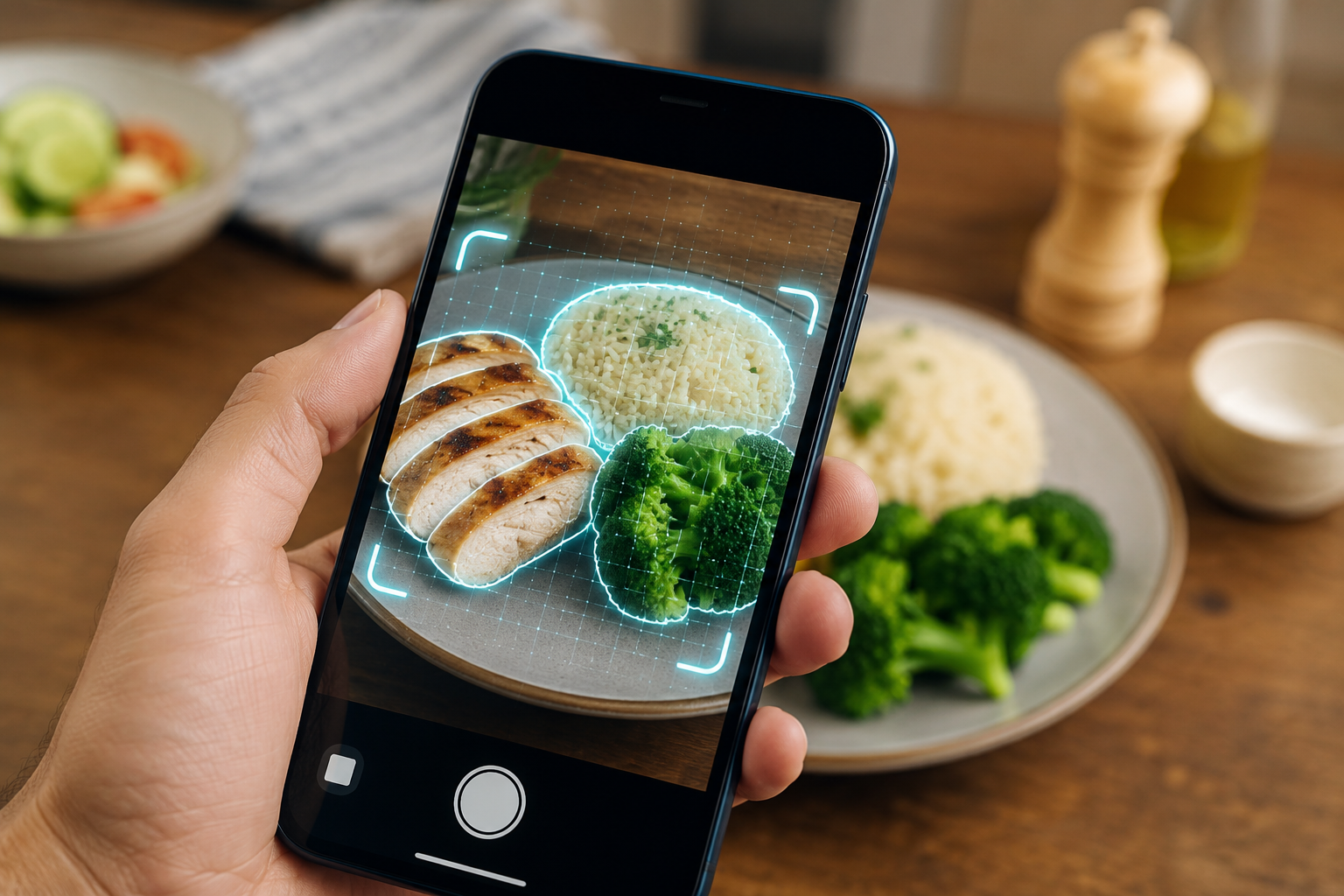
Manually logging small, irregular meals is exactly the kind of friction that causes people to abandon calorie tracking on Ozempic altogether. Photo‑based AI logging removes that friction — snap a photo of whatever you’re eating, however small the portion, and get an instant calorie and macro breakdown without searching a database or estimating grams by eye.
For GLP‑1 users specifically, this matters because the meals themselves are smaller and more irregular than a typical three‑meals‑a‑day pattern, which is exactly where manual logging breaks down fastest.
Caloura was built around this exact use case — quick, photo‑based logging with macro breakdowns, so you can keep an eye on protein and your calorie floor without turning every small meal into a five‑minute logging chore.
FAQ
# Do I still need to count calories if my appetite is already suppressed?
Loosely, yes — mainly to make sure you’re not under‑eating. The goal shifts from restriction to making sure you’re getting enough, especially protein.
# How much protein do I need on Ozempic or Wegovy?
Most guidance suggests 0.6–0.8 g per pound of body weight, prioritized above hitting an exact calorie number.
# Why do I feel low energy even though I’m “eating enough” calories?
This is often a protein or micronutrient gap rather than a total calorie problem — smaller food volume means less room for nutritional error.
# What’s different about calorie deficit on GLP‑1 medications versus normal dieting?
A normal calorie deficit relies on willpower to eat less. On a GLP‑1, appetite suppression does that part for you — so the real work shifts to making sure you don’t go too low, not staying under a ceiling.
Enjoyed this article?
Start your nutrition journey with Caloura.