How to Track Your Calories Daily
Why Most People Fail at Calorie Tracking
Calorie tracking sounds simple — log what you eat, see the numbers, make better choices. But most people quit within a week. Why? Because the apps are too complicated, the process feels like homework, and nobody explains the basics clearly. The truth is, calorie tracking doesn't have to be hard. With the right approach and the right app, it takes less than 2 minutes a day.
What Is a Calorie and Why Does It Matter?
A calorie is simply a unit of energy. Your body needs a certain amount of energy every day just to function — breathing, walking, thinking. This is called your daily calorie goal or TDEE (Total Daily Energy Expenditure). When you eat more calories than your body needs, you gain weight. When you eat less, you lose weight. When you match it, you maintain. That's the whole science — nothing more complicated than that.
Step 1: Know Your Daily Calorie Goal
Before you start tracking, you need to know your target. This depends on your:
- Height and weight
- Age
- Activity level
- Goal (lose weight, gain muscle, or maintain)
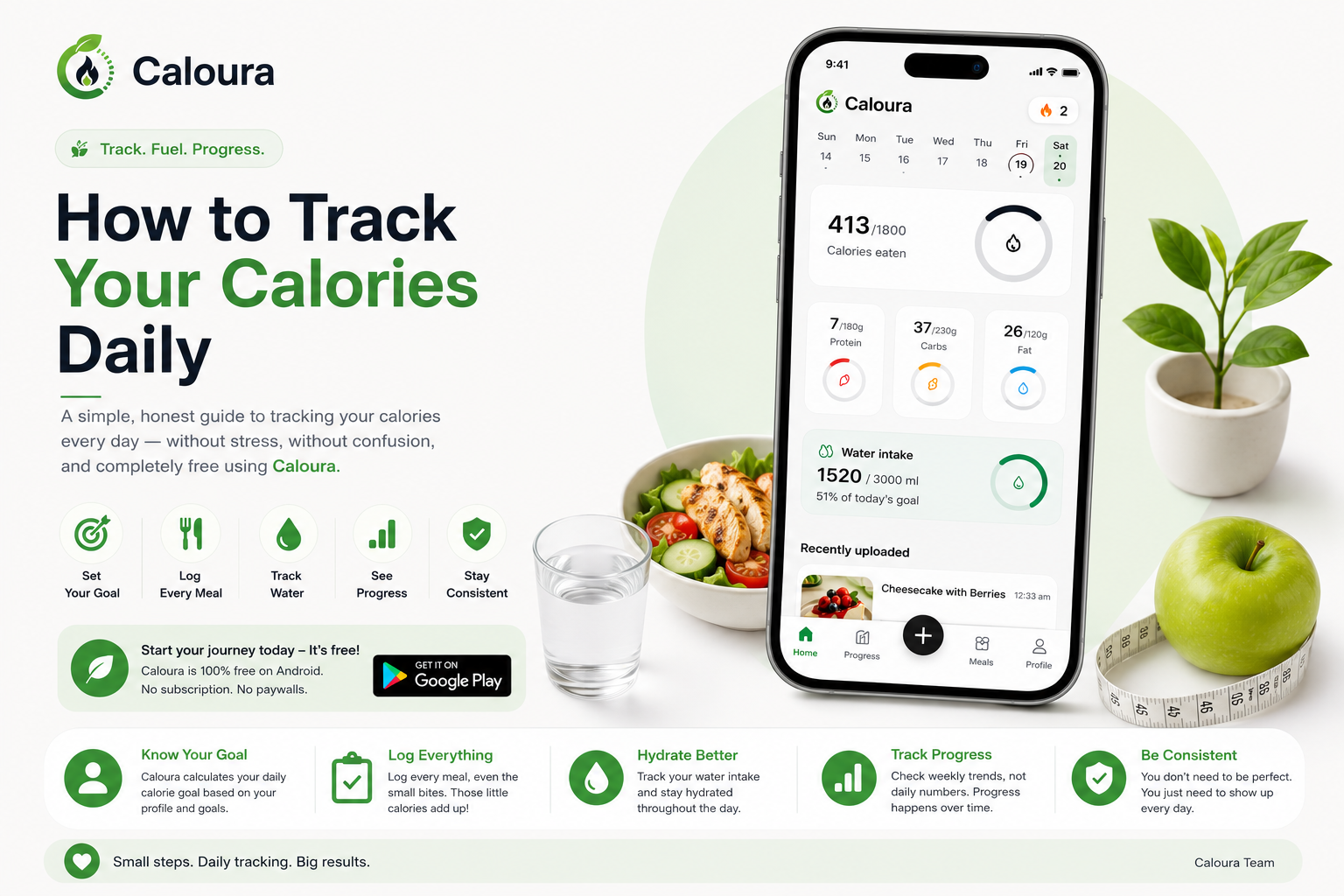
Caloura calculates this automatically when you set up your profile. You don't need to do any math yourself.
Step 2: Log Every Meal — Even the Small Ones
This is where most people make a mistake. They log breakfast and lunch perfectly, then forget the evening chai, the handful of biscuits, and the late-night snack. Those small things add up to 300–500 extra calories a day — enough to completely stop your progress. The fix: log everything immediately after eating, not at the end of the day. It takes 30 seconds and keeps your numbers accurate.
Step 3: Track Water Too
Hydration is directly connected to hunger. Many times when you feel hungry, your body is actually just thirsty. People who track their water intake consume fewer unnecessary calories throughout the day. Caloura has a built-in hydration tracker so you can log your water intake alongside your meals in the same place.
Step 4: Check Your Progress Weekly — Not Daily
Your weight can change by 1–2 kg in a single day just from water, salt, or digestion. If you check every day and see the scale go up, you'll get discouraged and quit. Instead, check your weekly average. That number tells you the real story. Caloura's weekly progress charts are designed exactly for this — smooth trends, not daily panic.
Step 5: Be Consistent, Not Perfect
You don't need a perfect day. You need a consistent week. If you overate at dinner, that's okay. Just go back to your normal tracking the next morning. One bad meal doesn't ruin your progress — but quitting does. The people who see results are not the ones who ate perfectly. They're the ones who showed up every single day and kept logging, even on bad days.
Start Today — It's Free
Caloura is completely free to download on Android. No subscription, no paywalls on the basic features. Just open the app, set your goal, and start logging your next meal. Your health journey doesn't need to start on Monday. It can start right now. 👉 Download Caloura on Google Play — free, simple, and built for real people.
Frequently Asked Questions
Do I need to track calories every single day?
No. Daily tracking works best in the beginning while you're learning portion sizes, but once you have a feel for your habits, tracking 4-5 days a week keeps you just as accurate. What matters is consistency over weeks, not perfection every day.
What's the easiest way to track calories?
Snap a photo of your meal and let AI estimate the calories and macros — that's the fastest method available today. Manual logging works too, but it takes longer and people tend to quit within a week because of the friction.
How long does it take to track calories each day?
With a photo-based app like Caloura, most people spend under 2 minutes a day total. Manual food diaries can take 10-15 minutes when you're weighing and searching for every item.
Can I track calories without weighing my food?
Yes, though it's less precise. Eyeballing portions or using your hand as a reference (palm = protein serving, fist = veggies) gets you close enough for most goals. AI photo tracking also reduces the need for a food scale since it estimates portion size from the image.
What's a normal calorie deficit for weight loss?
Most people lose weight steadily on a deficit of 300-500 calories below their TDEE. Going much lower isn't usually sustainable and can backfire by making tracking feel punishing instead of helpful.
Why do I keep losing track halfway through the week?
Usually it's because logging feels like a chore. The fix is picking a tool that takes seconds, not minutes, and logging immediately after eating instead of trying to remember everything at night.
Is calorie tracking still useful if I don't hit my goal every day?
Yes — weekly averages matter far more than any single day. One high day doesn't undo your progress, and one missed log doesn't either. What actually stalls progress is quitting altogether.
Enjoyed this article?
Start your nutrition journey with Caloura.