How to Count Calories for Weight Loss: A Complete Beginner's Guide
What is a calorie, and why does it matter?
A calorie is a unit of energy. Every food and drink you consume contains calories, and your body uses that energy to breathe, move, think, and function, even lying still, you're burning calories just to keep your organs running.
When you eat more calories than your body burns, the extra energy gets stored, mostly as fat. When you eat fewer calories than you burn, your body pulls from those stored reserves to make up the difference. That gap, eating less than you burn, is called a calorie deficit, and it's the mechanism behind every weight loss method that actually works, regardless of whether it's called keto, intermittent fasting, or "clean eating." Every one of those approaches works if it works by creating a deficit; none of them bypass this rule.
This is also why two people can eat completely different diets and both lose weight, and why someone can eat "healthy" and still not lose weight if they're eating at maintenance or above. The food quality matters for how you feel and your long-term health, but the number on the scale responds specifically to the calorie balance.
Step 1 — Find your daily calorie goal
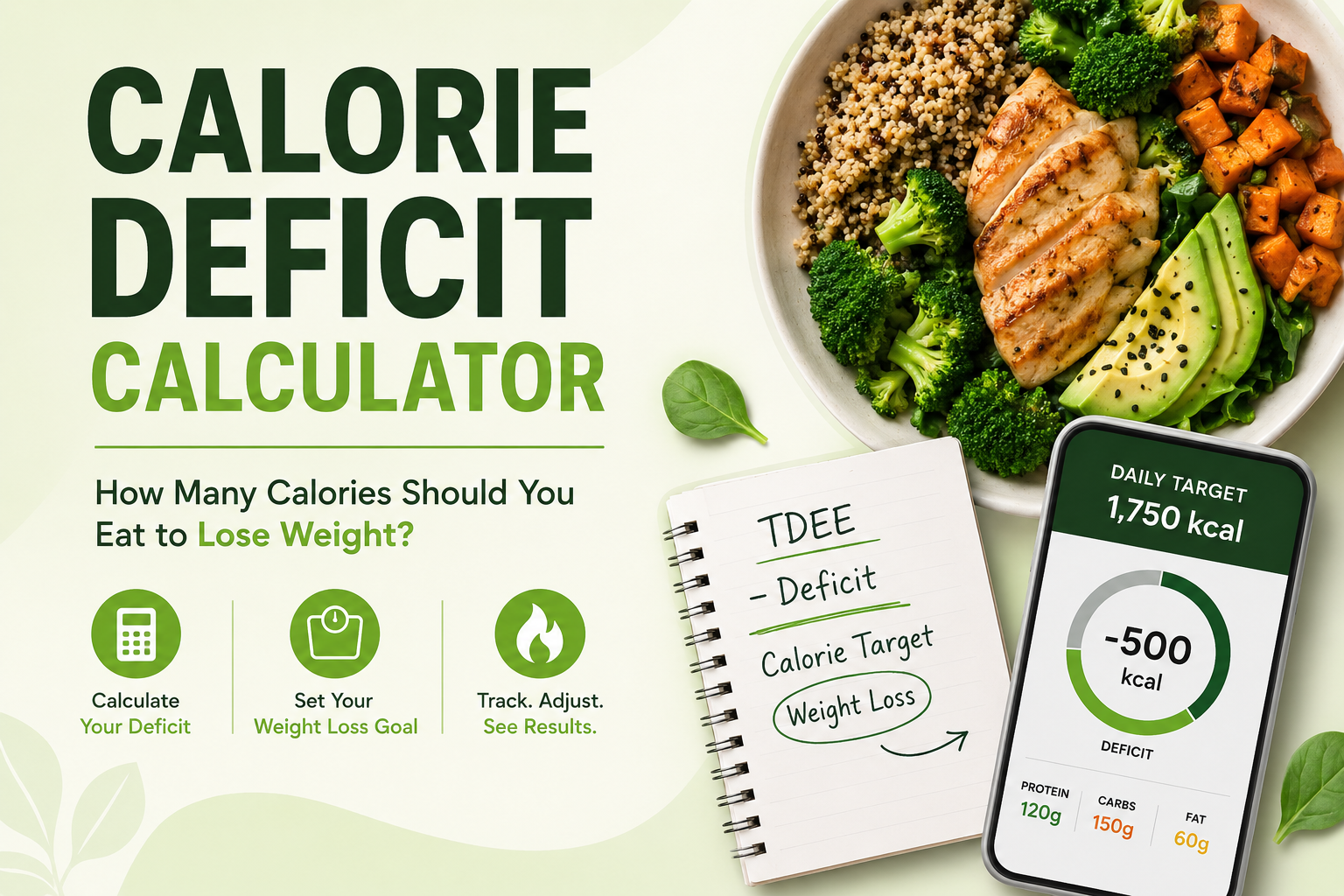
Your Total Daily Energy Expenditure (TDEE) is the number of calories your body burns in a day, including everything from your resting metabolism to digestion to any exercise you do. This number is different for everyone based on age, sex, height, weight, and activity level.
Once you know your TDEE:
- To lose weight, eat 300–500 calories below your TDEE
- To maintain your current weight, eat at your TDEE
- To build muscle, eat 200–300 calories above your TDEE
A real example
Take a 30-year-old woman, 165cm tall, 70kg, with a light activity level (desk job, workouts 2-3x/week). Her TDEE works out to roughly 1,900–2,000 calories/day. To lose weight at a sustainable pace, she'd target around 1,500–1,600 calories/day, a 400-calorie deficit, which typically results in about 0.7–0.9 lb (0.3–0.4 kg) of weight loss per week.
Doing this math by hand involves several formulas (Mifflin-St Jeor is the most common) and requires knowing your activity multiplier accurately, which most people guess wrong. Caloura calculates your personalized daily calorie goal automatically from your body data, no manual formulas, no spreadsheets.
Step 2 — Start logging your meals
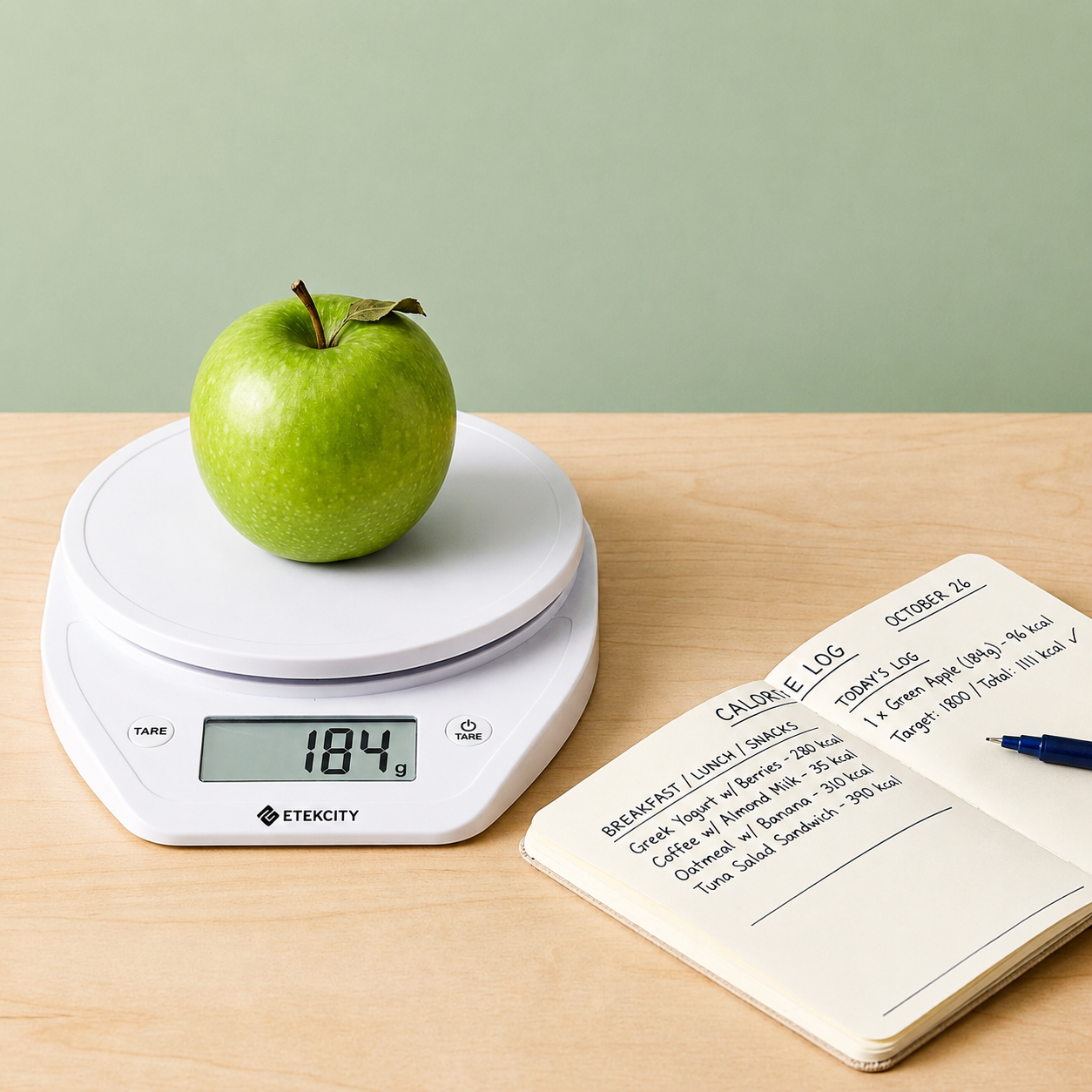
The single biggest reason people quit calorie counting isn't that the math is hard, it's that manual logging is slow and tedious. Searching a food database, adjusting portion sizes, and doing it for every single meal adds up to real friction, especially for home-cooked or mixed meals.
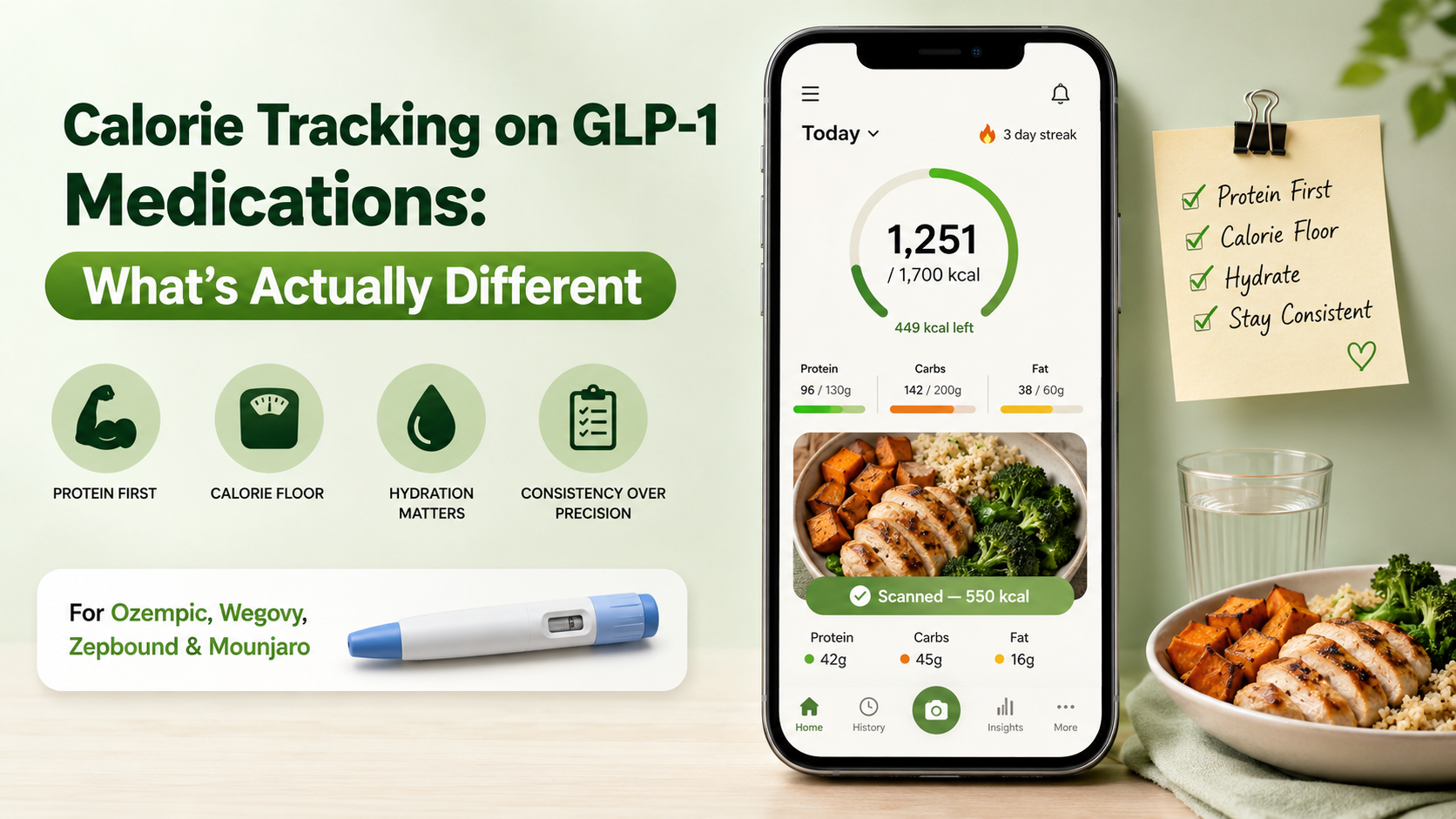
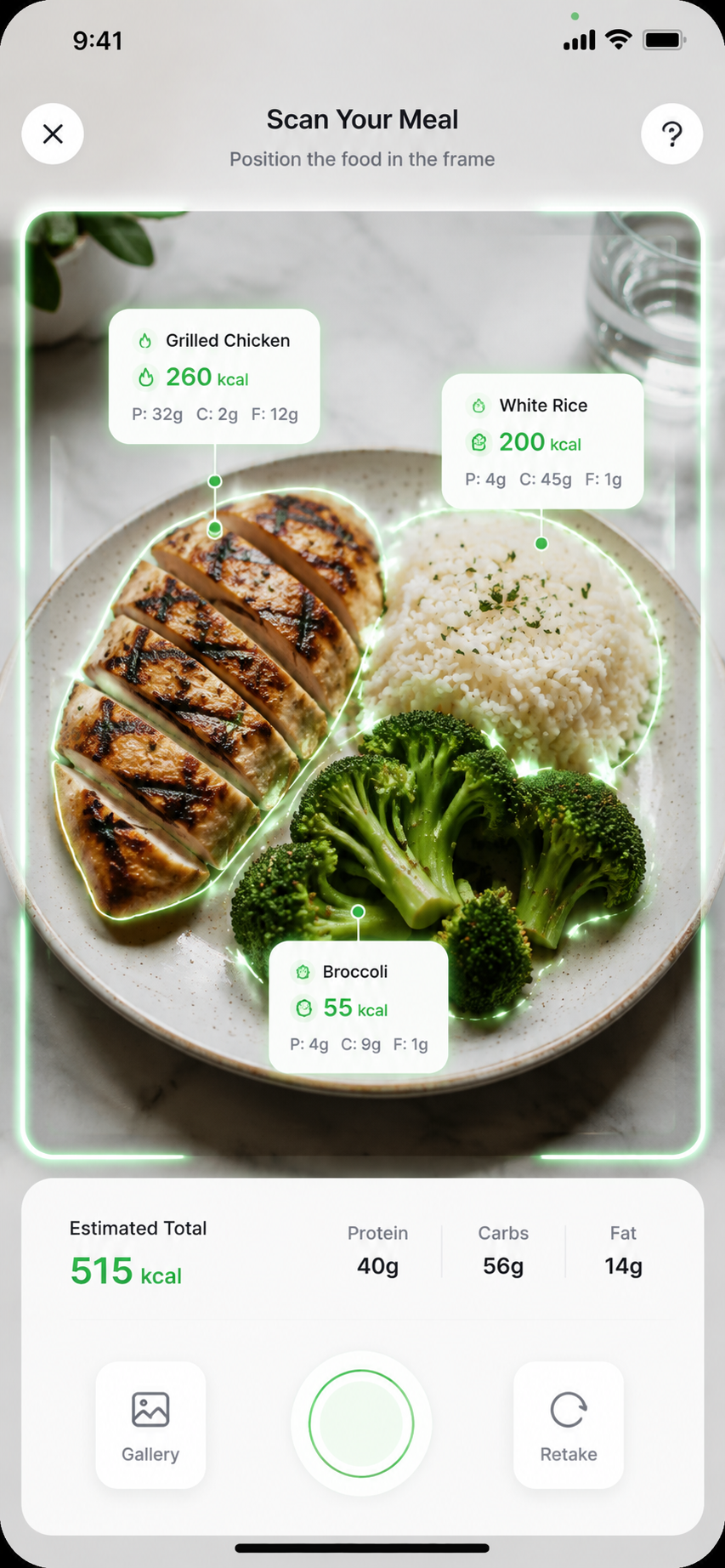
This is where AI food scanning changes the equation: point your camera at your plate, and the app identifies the food and estimates the calories in seconds. For packaged foods, barcode scanning pulls exact nutrition label data instead of an estimate.
The key principle: logging 80% of your meals accurately beats logging 50% of your meals perfectly. Consistency compounds over weeks; perfection for three days followed by giving up doesn't.
3 mistakes every beginner makes
- Forgetting liquid calories. Chai, juice, soda, coffee with cream, and alcohol all count, and they're one of the most common blind spots. A single sweetened latte can be 200-300 calories, roughly the size of a full meal's deficit.
- Underestimating restaurant portions. Restaurant meals are often 2–3x a typical home-cooked serving, and they're frequently cooked with more oil and butter than you'd use at home. If you eat out regularly, this alone can erase a deficit that looks fine on paper.
- Quitting after one "bad" day. One high-calorie day doesn't undo a week of consistency, your body works on averages, not daily snapshots. The people who see results are the ones who log the next meal anyway, not the ones who wait for a "clean start" on Monday.
How to track progress the right way
Body weight naturally fluctuates by 1–2 kg day to day due to water retention, sodium intake, and digestion, this is completely normal and has nothing to do with fat gain or loss. Judging your progress by any single day's number is one of the most common reasons people think a deficit "isn't working" when it actually is.
Instead, look at your weekly average and how your clothes fit over time. Caloura shows your daily, weekly, and monthly progress in visual charts, so you can see the actual trend instead of getting thrown off by normal daily noise.
Start today with Caloura — 100% free
Caloura gives you a personalized calorie goal, macro tracking, hydration log, progress charts, and smart reminders — all completely free, with no subscription required. Unlike most calorie trackers that lock core features behind a paywall, Caloura's full logging experience stays free for every user.
Download Caloura and log your first meal today.
Enjoyed this article?
Start your nutrition journey with Caloura.